

Meetings. Ugh…..
Reviled amongst staff, cherished by the attention hungry and generally the most misused productivity tool in human history. Over many years I’ve lead, facilitated, participated, argued in, laughed at\in\with, fell asleep in, walked out of and pretty much experienced every human emotion during these shining examples of corporate fun and games.
Well I’m here to give my ultimate guide to holding a meeting. Take from it what you may, but here’s how to make your meetings not suck.
#1 – Why? – The best meeting is the one you never have.
There is only one reason to hold a meeting.
To share or get information face to face from people that is relevant to all attendees AND give everyone the opportunity to question the information to gain clarity. e.g. What is this project setting out to accomplish, this is how you are involved and what are your concerns?
A meeting is interactive communication, i.e. 2 way. Statements, questions and answers. This may be to get information from your meeting participants (brain storming, focus groups, etc.) or to get direction (board meetings, steering committees, etc.) or a combination of both.
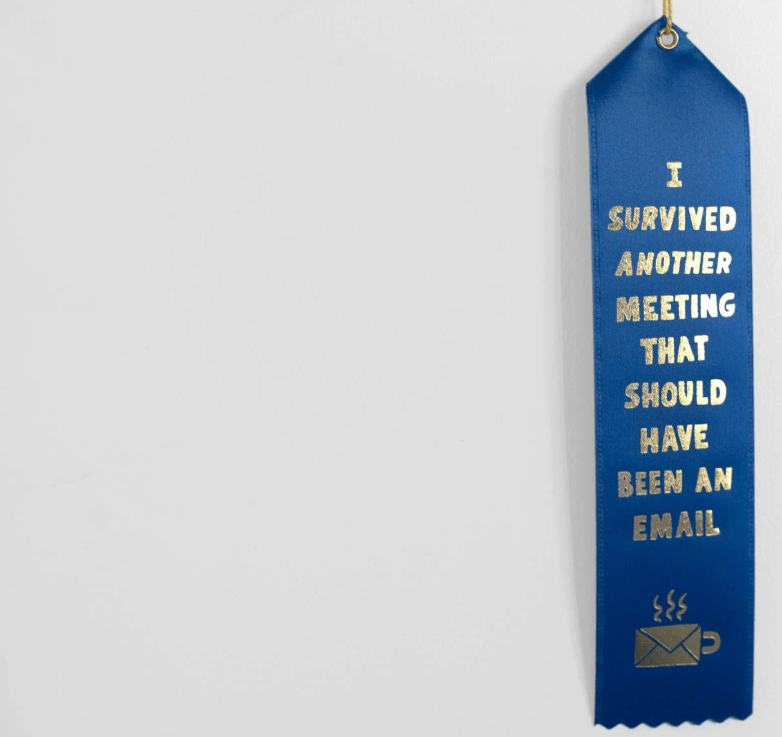
If your meeting is to “inform the stakeholders” or “share an update with the staff” that’s an email at best, plain and simple. Put down the laser pointer and get to drafting that email.
#2 – For the love of God, PREPARE!
Number #1 rule!…. I mean, after you decide to have a meeting. When you send your invites include all of this information. Ever walk into a meeting and the organiser is unprepared? Thanks for wasting everyone’s time Wasty McTimeWaster.
Agenda – What are you talking about, sent out before the event so all invitees know exactly what you’re meeting about. How long you expect each agenda item to take, this is good for staying on schedule and giving an indication of what items you think will be the meat of the meeting. Include your admin in your agenda, give yourself time to run the meeting. Introductions, meeting brief, etc.
Purpose – Why there is a requirement for you all to meet in the first place.
Objective – State what you want to achieve by getting together.
Content – Links to content you may reference during the meeting so you don’t go hunting for it during the meeting. Especially the agenda, like I have to say that! Understand what you are presenting, reading something you don’t understand makes everyone within earshot lose 50 IQ points.

#3 – Medium and Method – Know your audience AND your material.
Choose a delivery medium and method that suits both. They only work when considered together.
Make your content interesting – no death by PowerPoint.
Introduce pictures, graphs, videos. No more than 5 points per page at the most! And for the love of…whatever! Don’t read the slides word for word. Paraphrase, this shows your understanding of the content. If you don’t understand the content see Rule #2.
Heavy content such as a contract review?
Many breaks, snack food provided and maybe select multiple people to present the content. Anything to break the boredom.
Hostile meeting where the discussion may get sidetracked?
Have an agreed method of recording issues raised during the meeting and taking offline, don’t hijack your meeting time. Put the ground rules down at the start of the meeting.
Difficulty getting people to attend regularly?
Bring sweets, cakes, donuts or wheatgrass shots if that’s your workplaces thing. Gratuitous bribery and positive reinforcement through the use of incentives ALWAYS works. Make people want to come to your meetings.

#4 – Mind your manners – Structure and Etiquette
Introduce everyone – pick your poison this bit ALWAYS sucks.
ALWAYS do this, regardless of how well you know everyone, not everyone knows everyone else in your meeting. Consider the following methods:
- You will introduce everyone. Formal or informal? Can I call that guy Jake, or Jacob Teffenwauld, Head of Turbo Encabulator Development at FlumCo.
- Get everyone to introduce themselves. Equally loved and hated method. Good if you’re short on time.
YTF am I here? – remind everyone why they are here and for how long.
Read the purpose and objective of the meeting and read out the agenda. Include the timings for each sections. If you’re lucky someone will say “I don’t need to be here” you have saved that person a whole bunch of time and excluded someone who may just say useless shit because they are bored, but actually have no influence.
Positive confirmation.
At the end of each agenda item, ask everyone if they understood what’s been discussed and do they have any other questions. Can you move to the next agenda item? Wait for a response, then move on.
Speak slowly and clearly
I know I am genuinely shit at this and purposely need to slow down and annunciate. Practice being clear and calm. Use inflection in your voice, Don’t sound like a sleep app trying to read the phone book.
Conflict
9 \ 10 times you will not need to state the meeting rules, we are all generally good people who want to get through this with the least amount of fuss. If you know you are going into as particularly hostile meeting or have lively group of cats that need herding, set rules for everything. Who can speak and when, how to record issues for later consideration, Who’s in charge, (Normally you!)
Well there you have it, use my rules for meetings and I promise they will become less of a chore and more useful to you in the future. Just remember though, all of these rules need to be right sized for your meeting. And that comes with practice, don’t be afraid of meetings, they are useful tools when used right.
Like I said at the beginning, take from these rules what you want. And these rules are in no way a comprehensive set of all things you must consider, but it’s good start in making your own.
Practice, practice, practice until you find your right way of doing meetings.

 Full Auto Mining
Leave a comment